Sydney Sweeney Is Not What Women in Sport Look Like

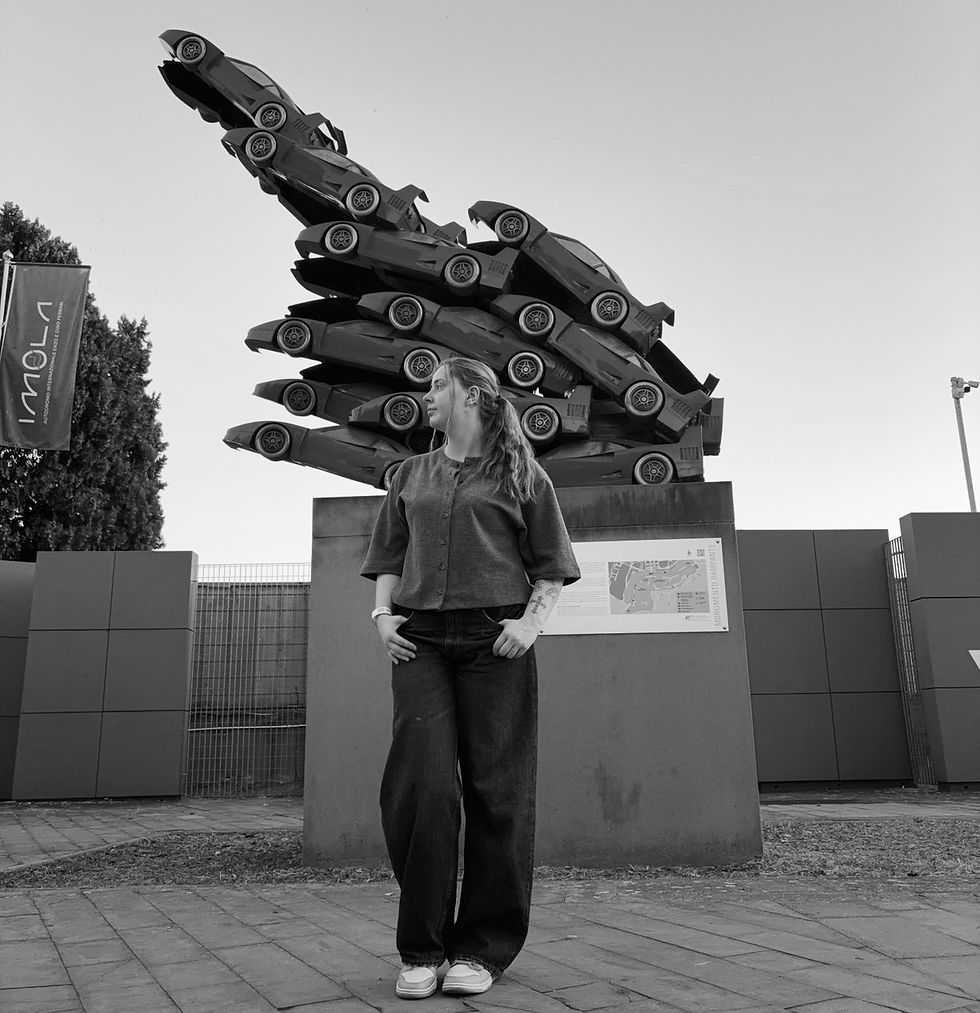
As a woman working in motorsport, I know how hard women have fought to be seen as competitors rather than decoration. That is why Sydney Sweeney’s latest sports betting advert is not provocative, clever or empowering. It is a disgrace.
There is something profoundly depressing about watching women spend decades fighting to be taken seriously in sport, only for a multimillion-dollar advertising campaign to reduce that progress to a naked body surrounded by sporting equipment.
That is precisely what Novig’s new campaign featuring Sydney Sweeney has done.
And yes, I think it is a disgrace.
Not because women cannot be sexy, or because women cannot pose nude.
And certainly not because femininity and athleticism are mutually exclusive.
The problem is not the naked body.
It is what that body is being used to sell, what the campaign communicates about women in sporting spaces, and who ultimately profits from that image.
Sweeney appears largely naked throughout the ad while mimicking different sports, using footballs, basketballs, a tennis racket and other sporting equipment as props. The advert culminates with her topless on a pool table, telling viewers: “You can’t trade this, I just look good here.”
It is an advert for a sports prediction company.
Yet when the sporting props are stripped away, the message is remarkably simple: the most valuable thing about the woman in the campaign is that she looks good naked.
That isn’t representation. It is objectification dressed up as sport.
The advert reportedly reached more than 22 million views in its first two days. And perhaps that is exactly the point.
Sex sells. Outrage sells. Controversy sells.
But women’s sport should not have to sell itself through the male gaze.
What Representation Actually Means

I write this as a woman in motorsport, a sporting environment where women have spent years fighting to be taken seriously.
You learn very quickly that being a woman in sport can mean being scrutinised for almost everything except the one thing that should matter most: whether you are good enough to be there.
It can feel as though women are expected to perform a second sport alongside the one they actually came to compete in…the sport of being attractive enough, likeable enough, feminine enough and never too threatening.
That is why representation matters.
Because a young girl watching sport needs to see women being athletes.
She needs to see the engineer who designed the car, the mechanic with grease under her fingernails, the driver fighting for tenths of a second, the strategist staring at timing screens and the journalist asking difficult questions in the paddock.
That is what meaningful representation looks like.
Motorsport itself is full of women proving precisely this point. Journalists and broadcasters such as Natalie Pinkham, Rachel Brookes, Rosanna Tennant and Lee McKenzie have built careers in an environment that was not designed with women in mind.
Engineers, strategists, drivers and team leaders continue to demonstrate that women don’t need to be invited into sport as decoration; they belong there because they are inarguably good at it.
Look at Simone Biles, Serena Williams, Naomi Osaka and Alysa Liu.
These women don’t represent a sanitised, convenient version of femininity. They represent strength, excellence, ambition, resilience, discipline and sporting achievement.
And representation matters enormously, especially to women of colour, because sport has not historically offered them equal visibility or equal power.
Representation for women in sport is not simply about seeing somebody who looks like you on television. It is about seeing somebody like you occupying the very top of a space you may once have been told wasn’t yours.
That is the power of women in sport, and that is the responsibility of sports media.
And that is precisely why this advert feels so regressive: at a time when women are demonstrating what they can do, this campaign asks us to look instead at what a woman looks like.
While Women Are Making History…

There is an almost absurd irony to the timing of this advert.
As Sweeney’s campaign tells us what a “woman in sport” supposedly looks like, Melissa Jefferson-Wooden was in Budapest doing something extraordinary.
She ran 21.47 seconds for 200 metres.
That is the fourth-fastest time ever recorded by a woman.
She won the 100m and 200m double at the inaugural World Athletics Ultimate Championship.
Gabby Thomas finished second, Kayla White finished third.
That is what a woman in sport looks like.
It looks like muscle, exhaustion, pressure, discipline and competition.
It looks like years of training compressed into 21.47 seconds.
It looks like Amy Hunt crossing that finish line and then looking directly into the camera to make the point the advert spectacularly missed.
As Hunt pointed out after finishing fourth, being a woman in sport isn’t glamorous all the time.
And that is precisely why the response to this advert has been so powerful.
Because women recognise exactly what is at stake when sporting achievement becomes secondary to how a woman looks.
Being Sexy Isn’t The Problem — Selling Sport Through Sex Is

Women should, of course, be free to embrace their sexuality.
Female athletes should be free to feel beautiful, embrace their sexuality and pose for magazines if they choose. None of that is incompatible with taking women in sport seriously.
The issue with this advert is context.
A woman choosing to celebrate her body as hers is one thing.
A company selling a sports product by stripping a woman naked and surrounding her with sporting props is something else entirely.
As boxer Skye Nicolson put it in response to the controversy, there is a difference between looking sexy because you do sport and using sex to sell sport.
The Serena Williams Comparison

One of the most revealing responses to the criticism has been the argument that female athletes themselves have posed nude.
Sweeney appeared to respond to the backlash by sharing images of athletes including Serena Williams, Megan Rapinoe and Sue Bird from magazine shoots.
But this comparison misses the point entirely.
Serena Williams posing for a magazine does not magically transform an advert starring a non-athlete into authentic representation of female athletes.
The question isn’t whether a woman is allowed to be naked.
The question is: why is she naked, who is benefiting from it, and what is the surrounding message?
Serena Williams’ body cannot be separated from what it achieved.
Her muscles won Grand Slams.
Her body changed tennis. Her strength became part of the sport’s visual language. Her physicality was not incidental to her success; it was one of the reasons she became one of the greatest athletes of all time.
Her body endured pregnancy, injury, scrutiny and an extraordinary level of public criticism.
When we look at Serena Williams, we know what her body is capable of.
That is fundamentally different from using sporting equipment as props around a celebrity whose athletic credentials are irrelevant to the product being sold.
And Novig had another option.
A very obvious one.
They could have hired an actual female athlete.
In fact, they could have hired dozens.
They could have told the stories of women who have spent their lives understanding sport from the inside.
Instead, they chose celebrity, sexualisation and sporting imagery without the sporting achievement that gives those images meaning.
That was a creative decision.
And not a very good one.
Sweeney Is Not Above Criticism
And before anyone accuses women of attacking another woman, let’s be clear: Sydney Sweeney should not be exempt from criticism simply because she is a woman.
She chose to participate in this campaign. She chose to stand in front of the camera. She chose to sexualise herself in an advert that uses sport as its backdrop.
We are equally entitled to question her decision.
Sweeney has an enormous platform, with millions of followers, extraordinary cultural influence and the ability to attach her name to almost any cause or campaign she chooses. With that comes an opportunity and a responsibility to think carefully about the messages she helps put into the world.
She could have used that platform to champion women in sport.
She could have worked with an actual female athlete. She could have celebrated women of colour breaking barriers in sport. She could have highlighted female drivers, engineers, journalists, coaches, mechanics or sports scientists. She could have helped create something that showed young women that their place in sport is not as something to look at, but as someone to watch.
Instead, she chose to participate in a campaign where her naked body is the central selling point.
There is a fundamental difference between a woman owning her sexuality and a woman lending her enormous platform to a campaign that reinforces the very stereotype women in sport have spent generations trying to escape: that when a woman enters a sporting space, her body is still more interesting than her ability.
The Women Responding Are More Powerful Than The Advert

Yet the most important thing happening right now is not Sweeney or the ad itself.
It is the women responding.
Ariarne Titmus called the campaign a “kick in the face” to women who have dedicated their lives to their craft and questioned how we are still monetising women’s bodies in sport.
Amy Hunt used the biggest platform available to her — immediately after running one of the fastest races of her career — to tell the world what women in sport actually look like.
Sophie Capewell challenged the idea that sexualised representation should be the default way society sees women in sport.
Gracie Kramer sparked a wave of athletes posting their own footage under one simple message:
This is what a woman in sport looks like.
Hundreds followed.
And that is the part that gives me hope.
Because suddenly, the conversation isn’t about whether women are attractive.
It is about what women do.
That collective response is infinitely more powerful than the advert itself.
Because women are refusing to allow a marketing campaign to define them.
This Is Bigger Than One Advert

We have to stop pretending that representation of women in sport is some fluffy concept that exists for corporate diversity reports.
Representation changes ambition.
A girl who sees Simone Biles can imagine becoming a gymnast.
A girl who sees Serena Williams can imagine becoming a tennis champion.
A girl who sees Laura Müller can imagine becoming a motorsport engineer.
A girl who sees a woman journalist in a paddock can imagine picking up a microphone.
That is why the images we put into the world matter.
Because children don’t just consume advertising.
They consume ideas about themselves.
And what does this advert tell a young girl?
That even when selling sport, the woman herself becomes the product.
We Won’t Stay Quiet

The irony is that the advert intended to generate attention.
It succeeded. But attention is not the same thing as admiration, and controversy is not the same thing as cultural relevance.
But the women responding to it have taken control of the conversation.
This is not what women in sport look like.
And perhaps that is the greatest lesson to come from this embarrassing advert.
Women in sport look like the driver fighting for tenths of a second. The sprinter exploding from the blocks. The mechanic working through the night. The boxer stepping into the ring. The strategist making the call. The journalist asking the question. The athlete pushing her body further than she thought possible.
They can be beautiful, glamorous, feminine, sexual and everything else society expects women to be.
But none of those things should ever become a substitute for their ability.
That is why this conversation matters.
The women who have spoken out have refused to let one advertising campaign define what women in sport are worth. They have reminded us that women’s bodies are not merely something to look at. They are instruments of achievement, endurance, strength and excellence.
They tried to sell us a woman’s body.
Instead, women reminded the world what those bodies can do.
And that is a message worth standing behind.
***
A Note On The Images:
I’ve deliberately chosen not to use any images from the advert alongside this article. The campaign is so heavily sexualised that, in my view, it veers into pornographic territory — and I have no interest in giving it any more free publicity.


Comments